

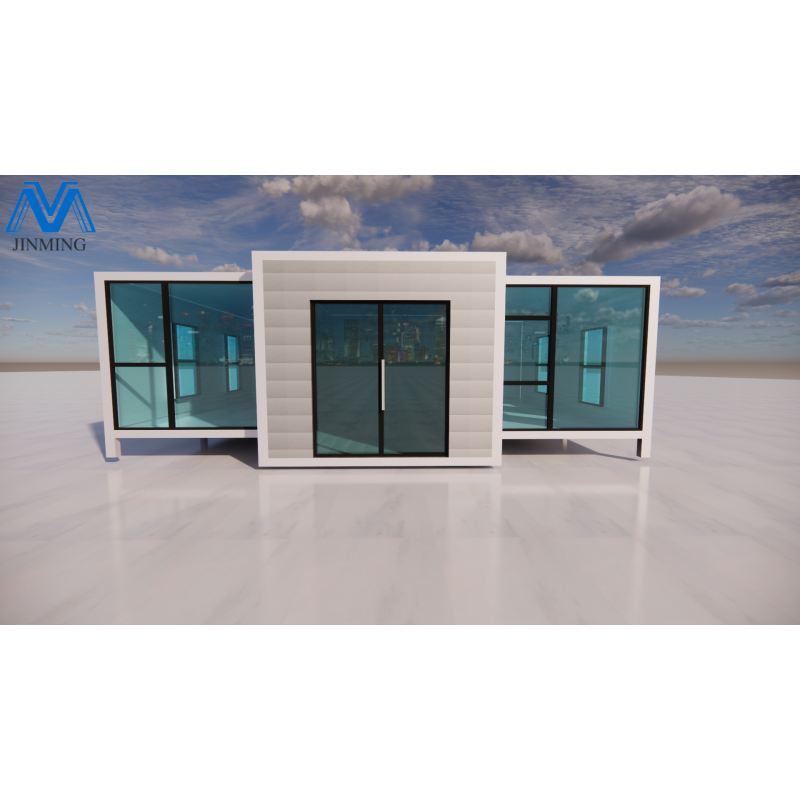
The UK allows the construction of container houses.A UK company named TenFold Engineering has developed a house called TenFold, which is a transformable container-style house. Additionally, the UK's newly revised land planning policy framework will appropriately relax standards, allowing builders to construct affordable housing and public service facilities on lower-quality plots in green belts. Although the policy does not explicitly mention container homes, the relaxation of standards suggests a more open attitude toward new building forms.
The UK Office for National Statistics has drawn a clear line: when housing expenses account for more than 30% of total income, they are deemed "unaffordable." A survey analysis based on government data clearly shows the housing difficulties faced by workers in the public service industry.
Figures show that in 45 per cent of UK boroughs, the average rent for a one-bedroom has exceeded 30 per cent of the post-tax earnings of new nurses. Teachers are also under similar pressure, at 43 per cent; The situation is even more difficult for medical assistants, whose rent accounts for 69 per cent of their income. This means that many new entrants to the public service spend almost half or even more than two thirds of their income on housing alone, and the pressure on their lives is self-evident.
This housing dilemma is particularly evident in London and the South East. While housing demand has remained strong in these regions due to the increasing influx of people, the supply side of housing has been in a state of chronic shortage, and the imbalance between supply and demand has led to a sharp rise in house prices and rents, which in turn has increased the living burden of workers.
More worryingly, the future supply situation of the housing market is not encouraging. Affected by the high interest rate environment, the financing cost of real estate development has increased; At the same time, the rise of materials of construction and the rise of labor costs, etc., together push up the construction costs. Against this backdrop, the supply of affordable housing is expected to decline across the UK. Such housing includes properties under shared ownership schemes and those provided by local councils and housing associations, Rented social rental properties, which are regulated by the government, are once an important force in alleviating the housing pressure of low- and middle-income groups, and the reduction in their supply will undoubtedly further exacerbate the housing plight of public service workers.
By 2025, the UK will still be facing a severe housing shortage. On March 20, the Financial Times cited a report by the charity Shelter, which pointed out that in nearly half of England's regions, the rent burden for newly hired nurses, teachers, and National Health Service (NHS) medical assistants has exceeded reasonable limits, highlighting the severity of the UK's housing shortage.
Temporary or mobile container housing (e.g., for construction sites) may fall under the “permitted development rights” category, and if the placement period does not exceed 28 days, full planning permission is not required.
In the UK, the prices of container houses vary based on their specifications, sizes, and functionalities.
Economy-class
Rental: In the United Kingdom, the monthly rent for some container homes is approximately £180.
Purchase: Basic container houses typically cost around £10,000.
Mid-range model
High-end configuration: Some container houses equipped with basic living facilities, such as bedrooms, kitchens, and bathrooms, can be purchased for approximately £4,939 to £5,726.
Luxury type: Some luxurious container houses are equipped with 3 bedrooms, a luxurious kitchen, a large-screen TV, and floor heating systems, and their prices can reach up to £550,000.
High-end customization
Special customization: Some specially customized container houses, such as those equipped with solar energy systems, eco-friendly heating systems, and private platforms, may come at a higher price, potentially reaching tens of thousands of pounds.
Land use and location also have different restrictions.Green belts/protected areas: stricter restrictions apply; councils may reject proposals to protect the landscape.
Specific Case Differences.Some local authorities (such as Brighton) are more open to innovative housing, while others resist non-traditional buildings.
Precedents exist: For example, London's “Container City” or “Urban Space Management” development projects have demonstrated successful approvals.
Alternative Pathways.Permitted development: If container homes are used for temporary or ancillary purposes (such as home offices), they may qualify.
Community-led projects: Under the “exceptional land use” policy, affordable housing schemes may be eligible for exceptions.
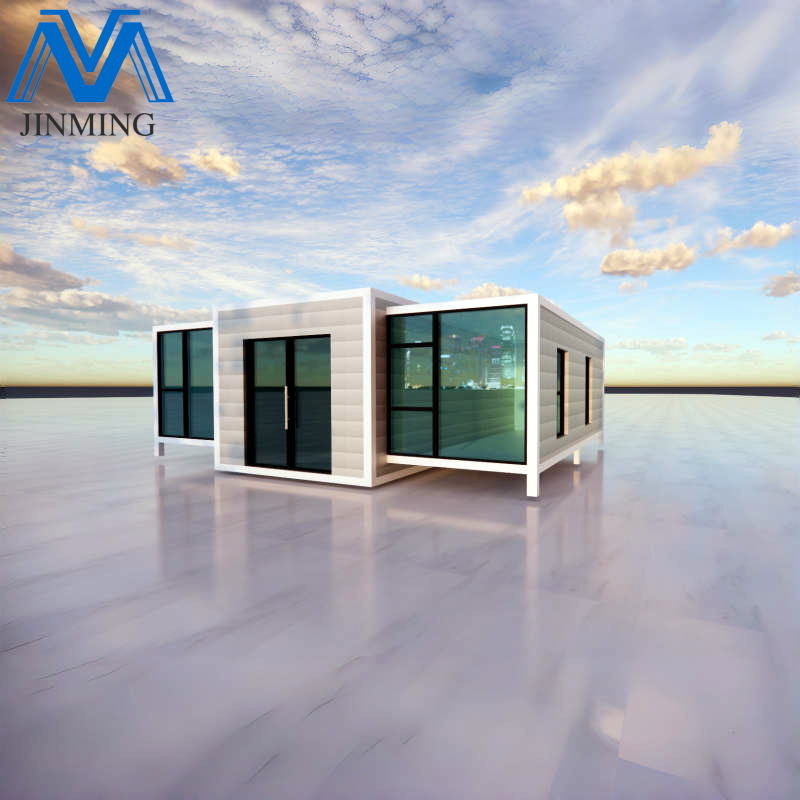
In view of the housing issues in the UK, the container houses promoted by Henan Jinming Metal Material Co., Ltd. are well-suited to the housing issues in the UK, with the overall framework made of galvanized steel and 50mm thick rock wool sandwich panels, with insulating glass fiber wool on the top.At the curved joints of the walls, 304 galvanized hinges are used, and the central axis is also made of galvanized material, capable of withstanding over 1,000 folding cycles.After installation, sealant is applied to the joints, and internal seals are installed. These designs ensure the container house possesses rust-proof, corrosion-resistant, insulated, soundproof, and waterproof performance.As a prefabricated house, container houses are more cost-effective than traditional construction houses, although they may not have the same lifespan, container houses can still last for up to fifteen years.
With its flexible mobility, container houses can easily adapt to different scenarios, creating convenient and comfortable living spaces for people. The top can be laid with solar photovoltaic panels to meet the electricity needs of indoor lighting and home appliance use through photovoltaic power generation; The accompanying solar water heater can provide stable heating and hot water for living, allowing the occupants to enjoy a comfortable washing experience at any time of the year. Indoor showerwater, domestic sewage will be unified into a special sewage treatment system, after purification treatment to achieve secondary use, not only save water, but also practice the concept of environmental protection.
Container homes can flexibly adjust their size depending on the number of occupants, and can be customized from small single-person units to large multi-person households; At the same time, it also supports personalized design, whether it is a simple and practical capsule house or an elegant apple cottage, which can precisely meet the aesthetic preferences of different people and is extremely plastic.
In the UK, the value of container homes has gone well beyond alleviating housing stress. These buildings, which are both functional and designed, not only add unique industrial aesthetic elements to the city, but also become a beautiful scenic spot dotted the street, allowing pragmatism and artistic beauty to merge perfectly in the urban space, bringing a new visual experience to residents and visitors.
